

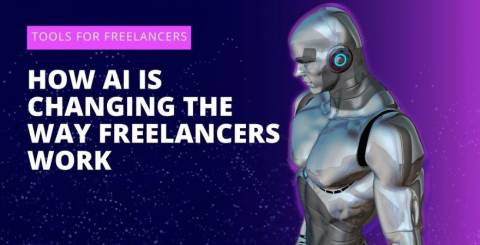
How AI Is Changing the Way Freelancers Work
Freelancing has always been about flexibility and independence. From writers and designers to consultants and developers, freelancers thrive on being able to set their own schedules, choose their clients, and carve out careers that reflect their skills and values. Yet with freedom comes challenge: juggling multiple clients, delivering high-quality work on tight timelines, and staying competitive in an ever-growing global marketplace.
Now, artificial intelligence is reshaping that landscape in profound ways. AI isn’t just another tool in a freelancer’s toolkit. These tools for freelancers are changing how they approach projects, manage workloads, and even define their roles in the economy. For some, it’s a productivity booster. For others, it’s a creative partner. And for everyone, it signals a shift in how independent work will evolve in the years ahead.
Speeding Up Everyday Tasks
One of the biggest ways AI impacts freelancers is through time savings. Tasks that used to eat up hours like sorting through data, drafting outlines, editing images, or formatting presentations can now be streamlined with AI-powered assistance.
Instead of spending late nights on repetitive details, freelancers can focus their energy on the parts of the job that require human insight: creativity, strategy, and relationship-building. The result isn’t just faster turnaround times but also the ability to take on more projects without sacrificing quality.
This efficiency is especially valuable for freelancers juggling multiple clients. The less time spent on busywork, the more time there is for meaningful client communication and delivering standout results.
Expanding Creative Possibilities
Beyond efficiency, AI opens new doors for creativity. Writers can use AI to brainstorm fresh ideas or refine phrasing. Designers can explore variations of layouts, color schemes, or compositions. Musicians and videographers can experiment with new sounds or edits that would have been time-consuming to produce manually.
What makes this powerful is that freelancers aren’t limited by their individual skill sets anymore. A writer who isn’t a professional graphic designer can still mock up visual ideas quickly. A consultant who isn’t an expert coder can create prototypes to share with clients. AI effectively expands what one person can bring to the table.
Leveling the Playing Field
Freelancers often compete with larger agencies or teams that have more resources. AI helps level that playing field. By automating tasks and expanding creative capacity, freelancers can deliver outputs that feel polished and professional without requiring a full staff behind them.
This levels the competitive landscape: an independent designer can present brand concepts that rival agency work, or a solo marketer can produce campaign materials that look like they came from a larger firm. Clients benefit by accessing high-quality work at freelance flexibility, and freelancers benefit by standing out in crowded marketplaces.
Personalization and Client Service
AI also changes how freelancers interact with clients. Instead of offering generic proposals or cookie-cutter deliverables, freelancers can tailor their work with greater precision.
For example, a freelance writer can quickly adjust tone and style to match a client’s audience. A consultant can analyze client-provided data more thoroughly and present insights in a polished way. A designer can generate multiple variations of a draft so clients have more choices.
The ability to customize work at scale makes freelancers more adaptable, which is increasingly valuable in a marketplace where clients want work that feels unique to their brand or vision.
New Roles and Skills Emerging
As AI reshapes the freelancing world, it’s also creating new opportunities for those willing to adapt. Some freelancers are moving into roles where they don’t just use AI tools for themselves but also advise clients on how to integrate AI into their workflows.
Others are specializing in quality control, ensuring that AI-generated drafts or designs meet human standards of nuance, originality, and emotional impact. Still others are carving niches by combining traditional craftsmanship with AI-driven enhancements, offering clients the best of both worlds.
In short, AI isn’t just a tool—it’s becoming a specialization of its own within freelancing.
Challenges to Consider
Of course, these changes come with challenges. Freelancers must be mindful of:
● Overreliance: Leaning too heavily on AI can lead to generic outputs. Human oversight remains essential to preserve originality and voice.
● Client Expectations: As clients become aware of AI, they may expect faster turnarounds or lower costs. Freelancers will need to communicate clearly about the value they bring beyond the tool itself.
● Skill Evolution: Staying competitive means continually updating skills—not just in using AI, but also in areas where human creativity and critical thinking shine.
The freelancers who succeed will be those who embrace AI as an assistant rather than a replacement.
The Human Element Still Matters
It’s tempting to wonder if AI will eventually replace freelancers altogether. But the truth is that human creativity, empathy, and judgment remain irreplaceable. A machine can generate options, but it can’t fully understand the nuances of a client’s brand story. It can clean up a photo, but it doesn’t know the emotional context behind that family portrait or product launch.
Freelancers succeed not just because of what they produce, but because of how they collaborate, listen, and translate abstract needs into tangible results. AI makes them faster and more capable, but it doesn’t make them redundant.
Looking Ahead
The freelance world has always thrived on adaptability. Each wave of new technology—from online job boards to collaborative platforms—has changed the way independent workers operate. AI is simply the latest, though arguably the most transformative.
In the coming years, we’ll likely see freelancing evolve into hybrid roles, where professionals are both creators and curators of AI outputs. Workflows will become more streamlined, projects will move faster, and the definition of what a “solo freelancer” can accomplish will expand dramatically.
For freelancers willing to embrace these tools, the future looks promising. AI won’t erase independence; it will enhance it, allowing individuals to take on projects that once required whole teams, and to deliver results that feel both efficient and deeply creative.
Final Thoughts
AI is changing freelancing in ways that touch every aspect of the profession. From time savings and creative expansion to personalized client service and new roles, the shift is clear: independent work is becoming more powerful, more versatile, and more competitive than ever.
But the essence of freelancing remains the same. It’s still about autonomy, relationships, and the unique perspectives that humans bring to their craft. AI is simply another tool—a transformative one—that makes it possible for freelancers to work smarter, scale their capabilities, and continue shaping the future of work on their own terms.
Similar Articles
Small marketing teams need tools that are easy to understand, flexible enough for different campaigns, and simple to review before publication.
Short-form storytelling requires more than attractive visuals. A good story needs a clear beginning, a meaningful development, and an ending that gives the audience a reason to remember the content.

Discover how AI is transforming customer service by handling routine enquiries, improving routing, assisting employees and helping businesses spot patterns.

AI visual tools help solo creators generate thumbnails, images, and video fast—cutting design time without sacrificing quality or workflow.
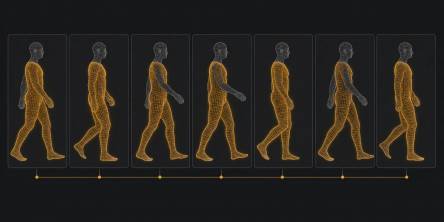
Most people encounter "swap" tools as a single category. A video goes in, a different person comes out, and the marketing rarely bothers to explain what was actually exchanged.
In recent years, fluctuating raw material costs, pervasive labor shortages, and other such challenges have created a perfect storm for manufacturing organizations.

A content idea can be clear in your head and still become difficult the moment it needs a visual.

Explore MLOps vs LLMOps and learn how enterprise teams deploy, monitor, and scale AI systems in 2026 with smarter workflows and reliable operations.
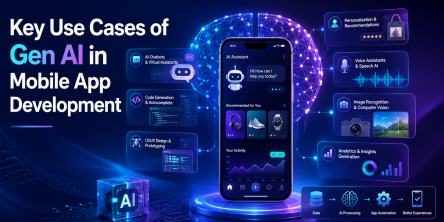
The digital world has always been evolving at a rapid pace. Ever since it first emerged. Take static applications, for example; their architecture is no longer agile enough to meet consumer expectations